Buying a used bike without a proper engine check is a bit like buying a used phone without checking if it turns on. Here’s how to actually check used bike engine problems before you hand over any money.
Start With a Cold Start
Always ask to start the bike cold — before the seller has warmed it up beforehand to mask potential issues. A cold engine reveals starting problems, unusual noises, and smoke far more clearly than a pre-warmed one.
Insisting on a cold engine start is one of the most revealing checks you can do — a pre-warmed engine can hide starting issues that only show up when genuinely cold.
Check Exhaust Smoke Color
- White smoke — often indicates coolant burning, a potentially serious issue
- Blue smoke — usually points to oil burning, indicating worn piston rings or valve seals
- Black smoke — typically a fuel mixture issue, often less serious but still worth noting
Listen for Unusual Engine Sounds
Knocking, excessive tappet noise, or rattling at idle are all signs worth investigating further, ideally with a trusted mechanic present during inspection if you’re seriously considering the purchase.
Check Engine Oil Condition
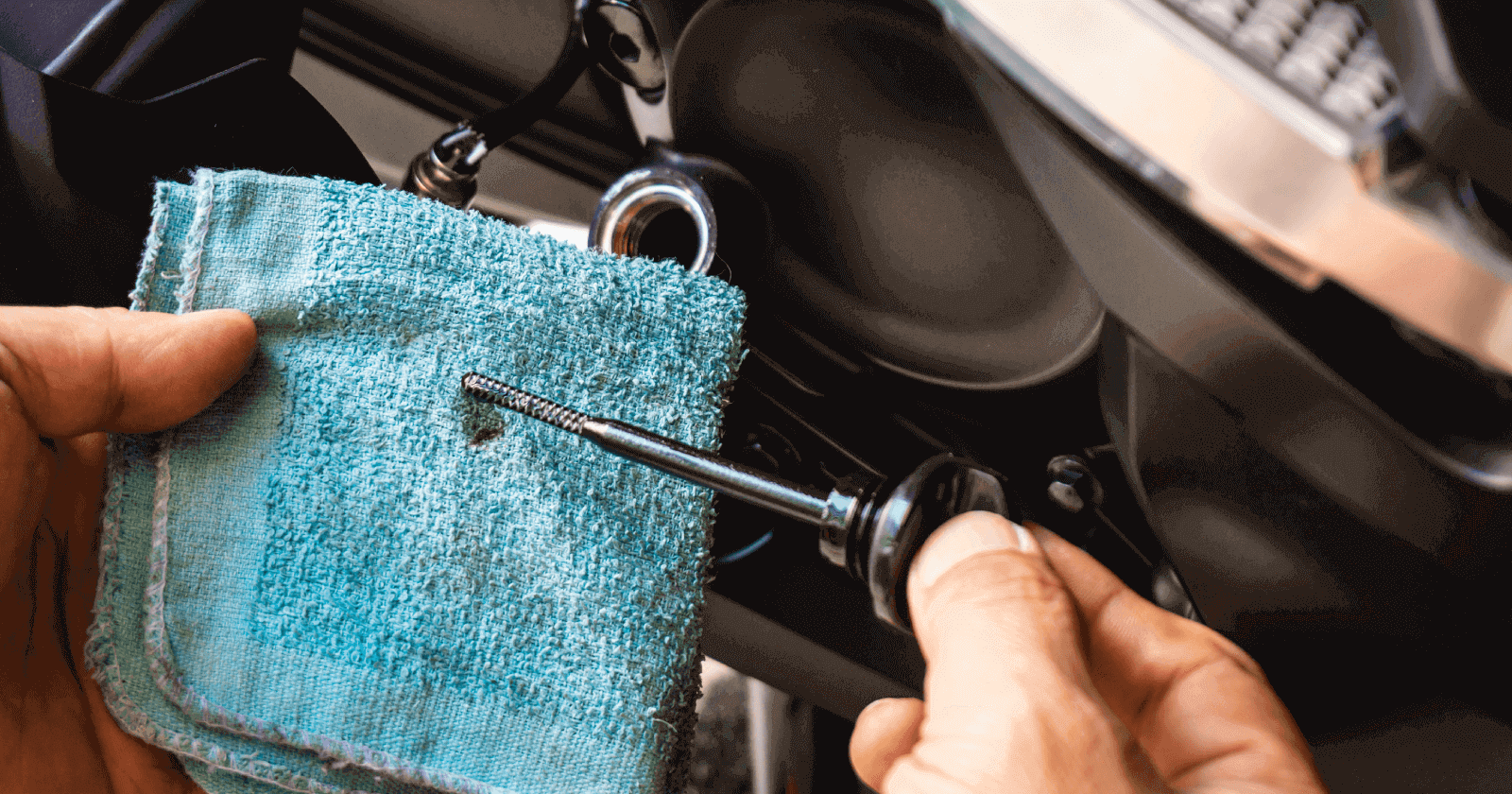
Pull the dipstick or check the oil window if accessible. Oil that’s extremely dark, gritty, or has a burnt smell suggests neglected maintenance — a red flag for overall engine care history, not just the oil itself.
Compression Test (If Possible)
A compression test, ideally done by a mechanic, reveals internal engine health more reliably than any visual or auditory check. Low or uneven compression across cylinders (for multi-cylinder bikes) indicates significant wear.
A proper compression test is the single most reliable way to assess genuine internal engine health, far more telling than visual inspection alone.
Check for Oil Leaks
Inspect around the engine casing, gaskets, and chain area for oil seepage or leaks. Minor seepage on an older bike might be acceptable, but active dripping leaks indicate gasket or seal problems needing attention.
Test Ride Performance Check
During the test ride, pay attention to how the engine responds under acceleration — hesitation, power loss at certain RPM ranges, or excessive vibration beyond what’s normal for that model are all worth flagging.
Service History Verification
Ask for the service book or records. A bike with consistent, documented servicing history is generally a safer bet than one where the seller can’t produce any maintenance records at all.
[link to related guide about bike test ride checklist here]
Frequently Asked Questions
What does blue smoke from a bike exhaust mean? It typically indicates the engine is burning oil, often due to worn piston rings or valve seals — a sign of significant wear.
Should I always ask for a cold engine start when buying used? Yes, this reveals starting issues and noises that a pre-warmed engine can mask, making it one of the most important checks.
Is a compression test necessary when buying a used bike? It’s highly recommended for a thorough assessment, as it reveals internal engine health more reliably than any surface-level check.
What does dark, gritty engine oil indicate? It usually suggests neglected maintenance, which can be a red flag for the bike’s overall care history.
Should I buy a used bike without service records? It’s riskier — service records provide valuable insight into maintenance history, so their absence should factor into your price negotiation or decision.
Conclusion
Learning to properly check used bike engine problems before purchase can save you from an expensive repair bill just weeks after buying. Take your time, insist on a cold start, and get a mechanic’s opinion if you’re genuinely unsure — a small inspection fee upfront is nothing compared to a major engine repair down the line.
[Image alt text suggestions: “used bike engine inspection”, “bike exhaust smoke check”, “bike oil dipstick check condition”]